In this entry I will discuss Downloaded (2013, Winter) directed by Alex Winter, which chronicles the rise and fall of the world’s first internet-based music file sharing system, Napster and by extension the effect of downloading music on the world. The documentary addresses many crucial issues regarding the legitimacy of creating a website that primarily functions based on the retrieval of MP3 audio files and the subsequent sharing of these files across a public server. The film delves deep into the ethical roots of these actions, and examines the powerful force of the internet, from its conception in 1968, to the invention of Napster in 1998. It examines a society in which consumption is king, and those who have “more” often still want more.
Shawn Fanning, the co-founder of Napster, is interviewed several times throughout the documentary. He provides a valuable insight into his reasoning behind creating Napster; describing the act of sharing a music file as “sharing emotion over the internet”.
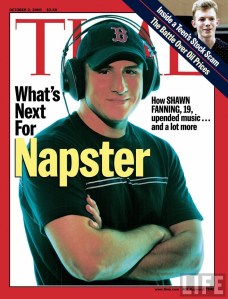
While the premise of Napster seems, at first, quite innocent in nature, it is revealed throughout the documentary that this simple concept would soon be blown far out of proportion, and beyond Fanning’s control as Napster fed into the public’s need for more material to consume. Peer-to-peer file sharing caused immense damage in relation to physical record sales and began a still ongoing war against piracy in the digital realm. What began as a simple way to share one’s favourite song with a friend erupted into lengthy legal battles and lawsuits filed against Fanning and his colleagues at Napster.
One quote from this documentary that is particularly relevant to not only the events surrounding Napster’s rise to prominence, but to similar online and youth-based movements, is the phrase “pure youth revolution”. The younger generation, at this time, spearheaded Napster’s growth and were the primary reason for its success. Their need to consume ultimately began to override the record companies means of existence. As a result of Napster, and the subsequent release of iTunes and Spotify in the years following, many recording companies could not make a profit when competing against online streaming giants. Consuming music became intrinsically linked with accessing it online, from a device, connected to the internet and to the rest of the world.
Jewitt, Robert, and Majid Yar. “Consuming the Illegal: Situating Piracy in Everyday Experience.”

 Mallaigh Slattery Film Analysis Project